The Marrickville area has a rich heritage of women involved in the struggle for equality between the sexes in all spheres of life.
Perhaps the most famous early workers for women’s rights are Louisa Lawson and Maybanke Anderson, who both lived in Marrickville.
Anderson, along with Rose Scott and Mary Windeyer, created the Womanhood Suffrage League of NSW (WSL) in 1891. The league campaigned for women’s right to vote in NSW and had sprung from ‘The Women’s Literary Society’, formed as a discussion group. Louisa Lawson was invited to join the league as she had started a similar discussion group around her publication ‘The Dawn.’
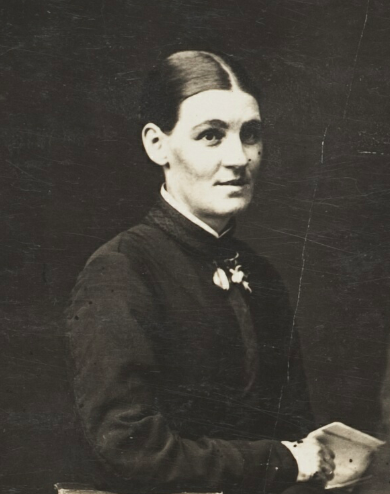
Image: State Library of NSW
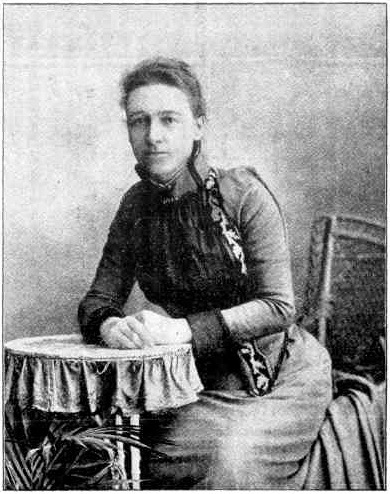
Image: Sydney Mail & NSW Advertiser 4/11/1893
A year later, three sisters, who are not well known to us today, also joined the league and all played a major role in its leadership and activities, for a while at least.
The Golding girls – Annie, Kate (Catherine) and Belle (Isabella) – had been born and raised in the gold town of Tambaroora, near Hill End, NSW. All three became school teachers, a ‘respectable’ profession for intelligent and educated working-class women.
From the beginning, the sisters appear to have had a strong bond and stayed close to each other. All three were in Newcastle in the mid-1880s where they started work on campaigning for female suffrage and where Kate married Michael Dwyer, another teacher, in 1887.
A move to Sydney happened in the 1890s. Michael Dwyer became Head Master at Marrickville West Public School and Kate and the growing family moved into a house in Warren Road. Annie also moved, eventually becoming Mistress in Charge at West Leichhardt, now Orange Grove Public School. Eventually all three sisters would move to Annandale and live almost side by side (75 and 79 Annandale Street) for the rest of their lives.
Formidable speakers
Once in Sydney they joined the Womanhood Suffrage League (WSL) and immediately made an impression. They developed a reputation as formidable public speakers, especially Belle who was described as “being one of the keenest debaters of her sex in the State”.
For many years they travelled around Sydney and beyond advocating for women’s suffrage. They might be guest speakers at venues with the local mayor as chair person; or debaters, as at Alexandria in 1894 where Maybanke Anderson and Belle debated the topic with men from the Democratic Debating Club.
But it was not always a calm and genteel debate. Many years later, Maybanke Anderson told a newspaper: “Miss Dickie, [Jessie Dickie from Newtown, and close associate of the Goldings – ed.] Miss Golding and I were a debating team and we never lost a debate. I remember only one fight. It was in Newtown Town Hall, and only a few chairs were broken.”
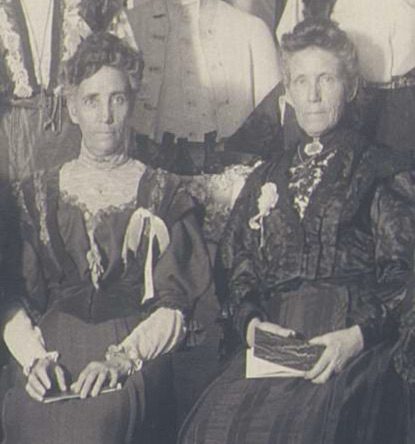
Image: Courtesy Unions NSW
But while the women of the league worked as a team, there were problems. These were both personal and political.
The Goldings and members such as Jessie Dickie were working class and others, particularly the leadership, were middle class and wealthy. Rose Scott lived in Woollahra and held salons attended by politicians, judges and intellectuals; Mary Windeyer was Lady Mary Windeyer; and while Maybanke Anderson was also a teacher, she owned her school.
While they were all united in the struggle for suffrage and the advancement of women, these differences lead to a difference of opinion on how the movement should progress. The Goldings had joined the Political Labour League (Labor party) but the leadership of the WSL wished to remain independent of any one political party.
It came to a head when the Newtown branch (i.e. the Goldings and friends) were expelled from the WSL.
Branching out
Not to be deterred, they formed the ‘United Branches of the WSL’ and gathered like-minded women around them. They had an immediate affect when they organised a deputation to the Premier, Sir John See. They wanted to show the level of support for the Women’s Franchise Bill, which had been lingering in the Legislative Council. They urged him to expedite the passing of the bill.
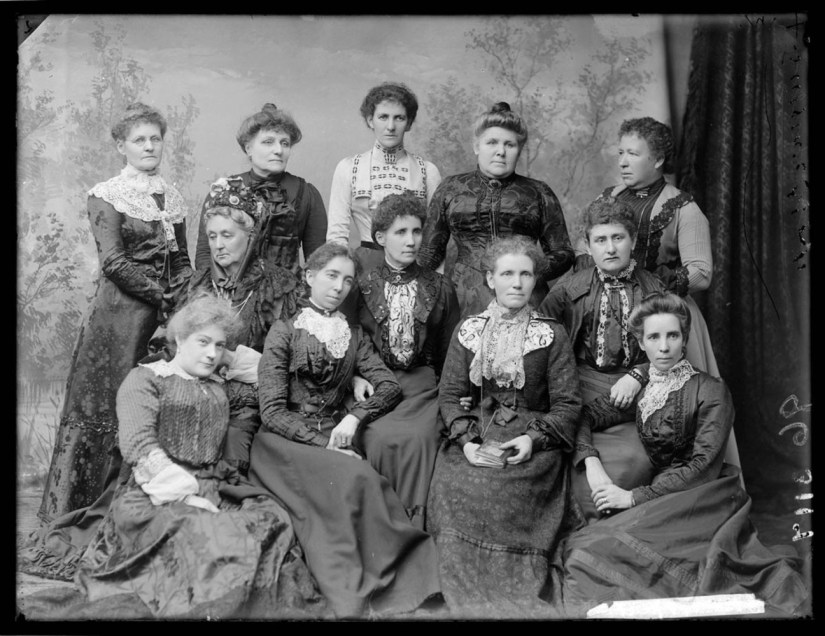
Back row, standing (L to R) Mrs Jackson (President, Redfern Branch), Mrs Wynn (President, Annandale Branch), Miss Caldwell (Camperdown), Mrs T. Parkes (President, Toxteth League), Mrs Hansen (President, Newtown Branch). Middle row, seated, Mrs McDonald (President, Glebe Branch), Miss Annie Golding (Organising Secretary of the United Branches), Mrs Chapman (Secretary, Redfern Branch). Front row, seated, Mrs C. Martel (Recording Secretary of the Central League), Miss Belle Golding (Secretary, Newtown Branch), Mrs Dickie (ex-President, Newtown League), Mrs Dwyer (Secretary of the Camperdown Branch).
Image: Mitchell Library, State Library of New South Wales ON219 (96)
The deputation numbered nearly 80 and had to be accommodated in the Executive Council Chamber. Perhaps it was just timing, but the bill finally passed the Legislative Council on 27 August 1902, about two weeks later.
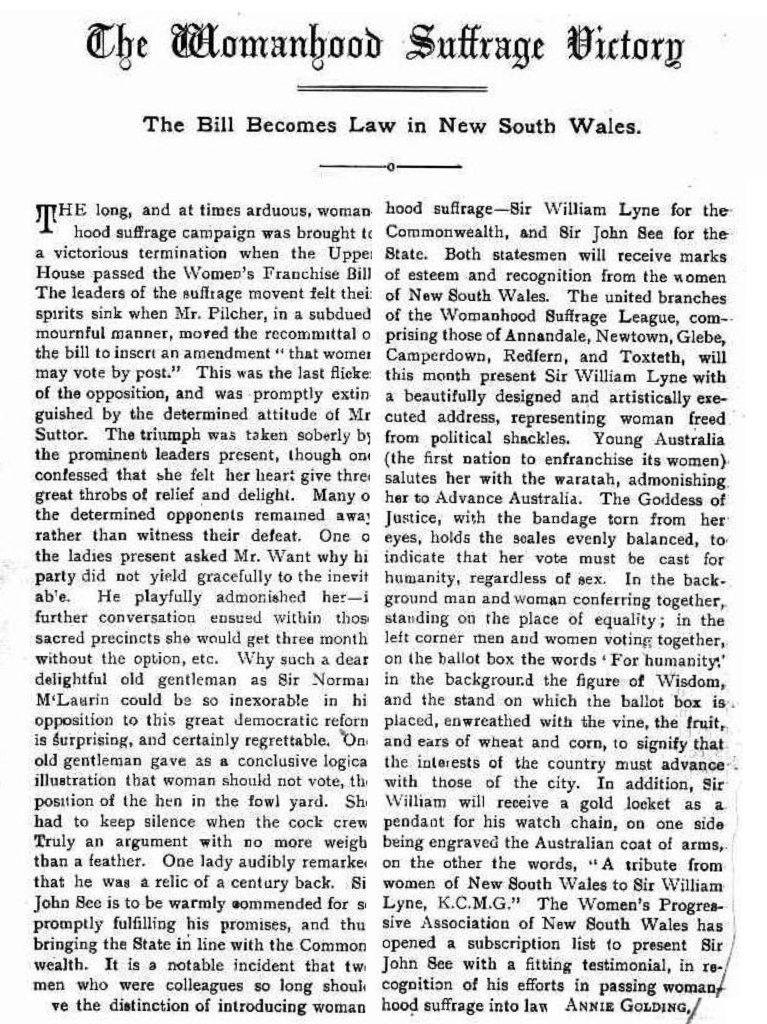
celebrating the passing of the Women’s Franchise Bill.
Image: Trove
Women’s Progressive Association
In October of 1901 the Goldings and their supporters had formed the Women’s Progressive Association (WPA), after the Legislative Council had rejected the franchise bill for the first time. The group continued to call for votes for women in NSW and at the federal level. Next, they would move into areas of women’s employment and welfare.
They sought to:
- have a “legalised minimum wage for all unorganised unskilled women workers”, who were extremely vulnerable to exploitation
- have “equal pay for women with men for work of equal merit” and “equal pay for men and women teachers”
- have marriage and divorce laws applied equally to men and women
- ensure the wife had a fair share of the assets accumulated in a marriage
- have women representatives on the senate of the University of Sydney and to be on the professional staff at Sydney and RPA hospitals.
They were to do this via ‘effective voting’, and held meetings and lectures advising women on how to use their vote to meet their ends.
The first action undertaken by the group was more prosaic. They took a delegation to the mayor of Sydney, Sir James Graham, to call for public toilets for women and children in parks and busy city areas, and public baths in those areas where homes did not have ’modern sanitary conveniences’. They also asked for municipal public libraries in working-class areas of the city.
From the very first, the WPA was talking about issues that would be important throughout the 20th century: women and public spaces, and women’s employment, health and education.
They also provided inspiration to other women, notably famed author Miles Franklin.
At a celebration of the 40th anniversary of the voting victory Miles Franklin told the audience how she first met the Goldings, via Rose Scott, on her visits to Sydney.
Later, when Franklin moved to the United States of America and became involved in trade unions she kept up a regular correspondence and exchange of magazines with the Goldings.
For the rest of their lives the three sisters were involved in campaigns, organisations or occupations aimed at bettering the lives of women.
Kate
Kate became heavily involved with the Political Labour League (Labor Party) and established the first women’s committee in 1904. At its inaugural meeting 300 women voted unanimously for her as President, a position she held for 12 years.
She campaigned for policies for women to be placed on the policy books of the party. This gave women leverage when the party gained power. Her workload was immense over many years, including forming the Women Workers Union to protect those vulnerable female workers identified by the WPA (WPA item 1 above). She stood as a candidate for Balmain in the State election of 1925.
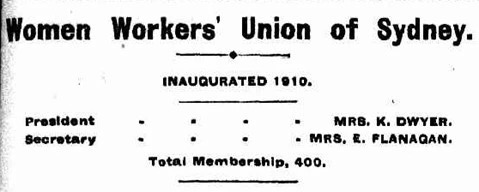
Image: Courtesy Unions NSW
Besides this political activity, for 34 years Kate was a director of the Benevolent Society and the Royal Hospital for Women in Paddington. Eight months after her death a plaque was unveiled in the hospital in her honour. [I am currently searching for this plaque which was misplaced when the hospital was sold]
In 1916 Kate became the first woman in the British Empire (Commonwealth) to be appointed to a University Senate (University of Sydney) and held the position for eight years. (WPA item 5)
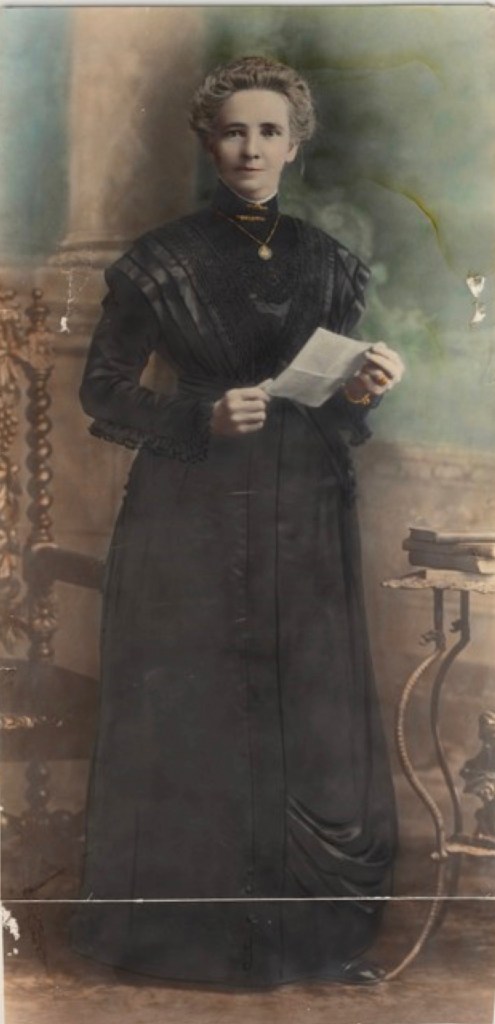
Image: Courtesy Unions NSW
Perhaps the final word on the work of Kate Dwyer should be left to The Australian Woman’s Weekly of 10 March 1934. In an article sub-headed “Women who spent their lives in service of others” it says: “Her whole life has been an effort to ameliorate the conditions of her fellow women… and no movement for the betterment of the conditions of women in NSW during the present century has not had her active support”.
Annie
Annie, as a school teacher for 45 years, was a foundation member of the Public School Teachers Association and its first female office bearer. She campaigned for the rest of her life for equal pay and opportunities for women within the teaching profession (WPA item 2). She often faced opposition from male teachers, including within the association. Sadly, Annie was not to see women achieve equal pay in the state school teaching system. It didn’t happen until 1958.
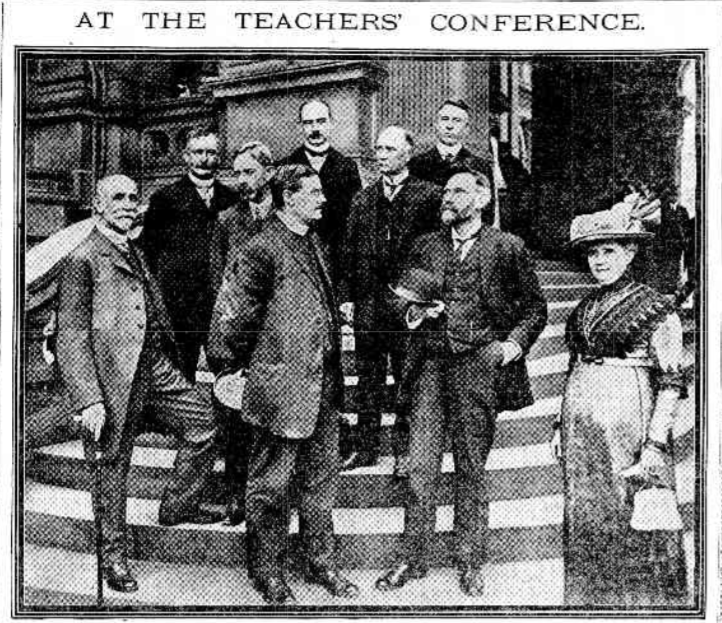
looking a little left out.
Image: The Daily Telegraph 16/12/1913 Page 9. Trove
Annie’s obituary in the Sydney Morning Herald in December 1934 credits her with playing a prominent role in framing the education policy of NSW, particularly the university reform legislation of 1912. This legislation provided a university education to students from poorer backgrounds at a reduced rate. It also abolished life tenure to the Senate, no doubt helping her sister Kate gain a position in 1916.
Annie was a prolific speaker and writer and our Australian Women’s Weekly story of 1934 notes that she was still delivering lectures at 80 years old. Her latest was “What women have secured through the vote”. Annie died later that year after slipping and falling from a tram.
Belle
Belle left teaching and became a government inspector with the Department of Labour and Industry. She became the first female inspector to be appointed under the Early Closing Act.
This Act was “for the early closing of shops and to regulate the hours of employment in shops”. It was Belle’s job to ensure that the Act was being complied with.
To give us some idea of working conditions then, Belle was interviewed in 1914 and told of pay and conditions before the Act:
“When I began my inspection it was quite common to find girls working in tea-rooms and restaurants 104 to 108 hours a week for 8 shillings to 12 shillings per week. In the same places today girls get £1 per week of 56 hours with 1 ½ clear days off.
“Fifteen years ago wages were very low in drapery and grocery establishments, and the places were open to 8, 9, or 10 p.m. sometimes even 11 p.m. But under the Early Closing Act the closing time is fixed for 6 p.m. with one late night (10 pm) each week and a full half day off.” (WPA item 1.)
Later, Belle was to become a factory inspector and carry out the same compliance role. The Australian Woman’s Weekly wrote that “for 27 years she faithfully looked after the interest and welfare of thousands of women employed in shops and factories”.
Driven by a strong Christian faith and a profound belief in justice, the three Golding sisters spent their entire lives in service to the advancement of women. They deserve to be remembered and honoured, especially on International Women’s Day.
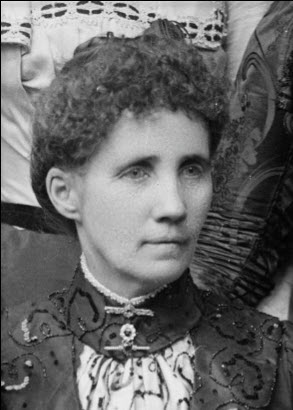
President of Women’s Progressive Association,
1904–1934
Foundation member/first female office bearer, NSW Public School Teachers’ Association, 1908
Member: State Children’s Relief Board, 1911–1931
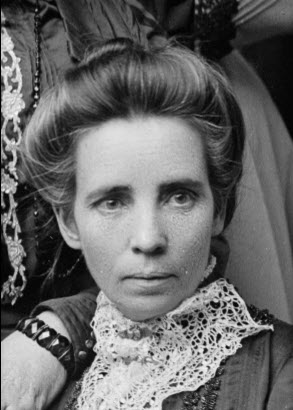
Established Women Workers Union for vulnerable women (sweated labour)
Director of Benevolent Society and Royal Hospital for Women for 34 years
First female fellow of senate University Sydney 1916-1924. First woman in this role in the British Empire.
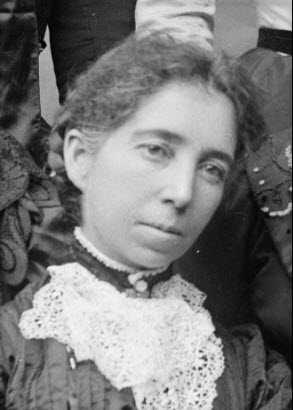
First female inspector under the Early Closing Act of 1899
Senior Inspector (Women) under Factories and Shop Act 1913-1926
First woman to chair a Wages Board (Arbitration)
We have applied to Blue Plaques NSW for a plaque in honour of Annie, Kate and Belle. We await a final decision.
Rod Aanensen
I would like to acknowledge and pay my respects to historian Kate Deverall for her work on the Golding sisters and her efforts to bring their contributions to the advancement of women in NSW into the light.
I would also like to acknowledge and thank Neale Towart, Librarian and Heritage Officer at Unions NSW for his efforts in tracking down photographs and articles for me.
See Women of Note for stories about Caroline Chisholm, Mary Reiby and Mary Gilmore.
See Marrickville Women at War for a story about women workers fight for equal pay during WW2.
See A Hidden Life for the story of Charlotte Meek who was receiving equal pay with men in 1865!
 Marrickville Heritage Society